
Executive Summary
- Proper kitchen practices can reduce the amount of fats, oils, grease, and food waste entering drains and help a grease trap or interceptor work more effectively.
- Persistent odors, slow drainage, recurring clogs, visible buildup, and backups can indicate that a grease trap or connected drainage system needs attention.
- Cooking volume, menu, grease production, system capacity, and maintenance history all affect how frequently professional grease trap maintenance should be performed.
- Having your grease trap inspected and cleaned regularly can help identify and eliminate developing problems and reduce the risk of costly backups.
Grease Problems Do Not Stop at the Trap
Grease traps and grease interceptors play an important role in commercial kitchens by capturing fats, oils, grease, and solids before they can enter the broader drainage system. By separating these materials from wastewater, the system helps limit the amount of grease that travels into connected drain lines.
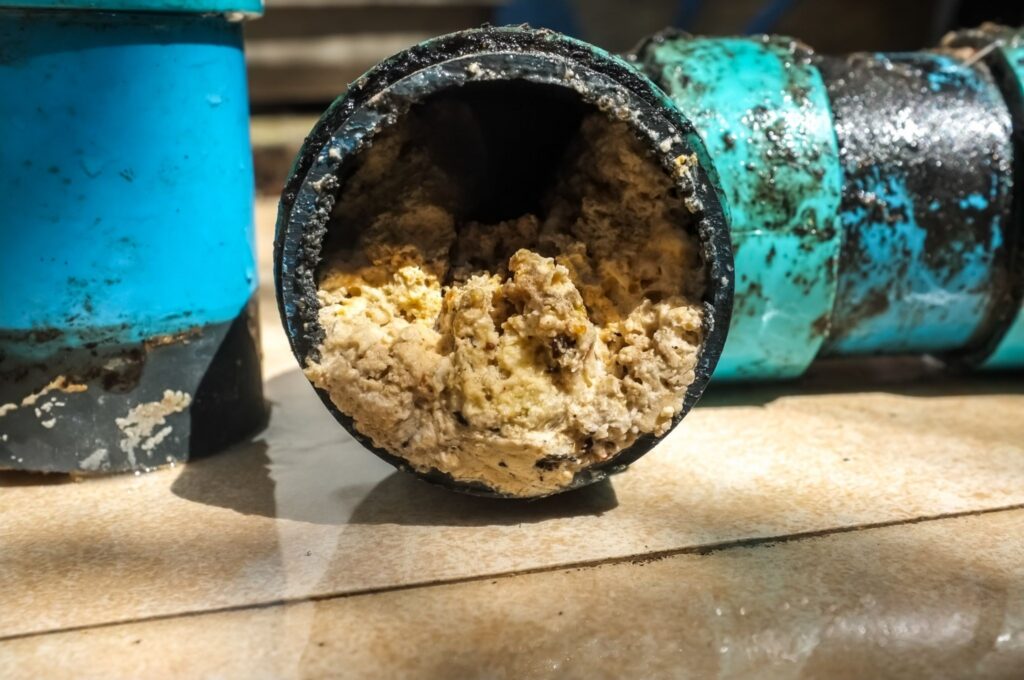
However, a grease trap should not be treated as an isolated fixture. Even with a properly functioning trap, excessive grease entering the plumbing system can contribute to buildup in connected piping. Over time, that accumulation can restrict drainage and contribute to common plumbing problems, such as clogs, backups, and the emission of unpleasant odors—this is why grease trap maintenance should be part of routine restaurant operations rather than something that happens only after a backup.
Regular grease trap cleaning and pumping can remove accumulated grease and solids, while inspections can help identify changes in the condition or performance of the system. The guide below can help you build out a comprehensive maintenance approach that considers both the trap and the surrounding drainage system.
Grease Traps and Interceptors Are Not the Same
Before learning how to take care of your system, you need to know what type of system you have. Grease traps and grease interceptors are not the same, though both help keep fats, oils, grease, and solids out of a restaurant’s broader drainage system.
Grease traps are generally smaller devices that serve individual fixtures or limited portions of a plumbing system, while grease interceptors are larger systems designed to handle greater wastewater volumes.
The size and configuration of a restaurant’s grease-control system can affect its cleaning, pumping, inspection, and maintenance needs. If you are unsure which type of system your restaurant uses, a professional plumber can evaluate the equipment and help determine an appropriate grease trap maintenance approach.
Get Plumbing Services Based On Your Needs
Alpha Environmental Services can create a maintenance schedule that fits your specific situation, helping you get the most out of your plumbing system.
How to Minimize the Amount of Grease That Builds Up
Restaurant staff can help reduce grease accumulation through appropriate waste-handling practices like scraping excess grease waste into an appropriate container before washing cookware and dishes. Keeping food solids out of sinks is equally as important, as food particles can combine with grease and other materials, contributing to buildup within connected piping. Using appropriate drain screens can help you catch the material that has not been fully scraped off.
Even though restaurant staff can reduce the amount of grease entering the system, material is bound to accumulate inside traps and interceptors, so that material still needs to be professionally removed every so often. Commercial grease trap pumping helps Portland restaurants remove the grease and solids that build up over time and keep the system ready to perform its intended function.
How Fast Do Grease Traps Fill Up?
Most commercial grease traps in the Portland metro area fill up to their critical 25% capacity limit within about one to three months; however, this rate is highly dependent on how a restaurant operates. Some determining factors include:
- Cooking frequency
- The types of dishes being made
- The number of fixtures connected to the system
- The configuration of the trap and interceptor
- Employee practices
Therefore, a high-volume kitchen serving fried foods, for example, may generate substantially more grease than a smaller operation with a different menu.

Knowing When to Clean a Grease Trap
Due to the various factors mentioned above that impact how quickly a grease trap fills up, there is no universal cleaning schedule that works for every restaurant. Still, looking at maintenance history can provide a useful reference point. Restaurant operators can use that information to track how much grease and solids are removed during each service and how long it takes for drainage problems or other warning signs to return. If a trap consistently approaches capacity between scheduled services, the maintenance schedule may need to be adjusted.
Do Not Wait Until a Backup
Waiting until a trap overflows or a connected drain backs up can create a much larger operational problem. Preventative grease trap cleaning helps remove accumulated material before it contributes to restrictions or overflow.
Commercial grease trap pumping in Portland should be scheduled based on actual operating conditions and system performance rather than relying on an arbitrary calendar interval. Scheduling frequent plumbing inspections can help you keep a pulse on your system and develop a maintenance approach that reflects your restaurant’s needs.
Some Warning Signs May Show Up Before a Backup
Grease-related drainage problems can develop gradually. Paying attention to changes in how the kitchen’s plumbing performs can give restaurant operators an opportunity to address the problem before they encounter plumbing emergencies.
Common warning signs include:
- Persistent odors – Strong or recurring foul odors around a grease trap, interceptor, or drain may indicate accumulated organic material or grease.
- Slow drainage – Sinks or other fixtures that drain more slowly than usual may indicate developing restrictions.
- Recurring clogs – Frequent drain clearing can suggest that an underlying buildup problem has not been resolved.
- Visible grease or buildup – Material around accessible drains or components can indicate that the system needs cleaning or evaluation.
- Backups – Wastewater backing up through sinks, floor drains, or other fixtures requires prompt attention.
A single slow drain does not automatically mean the grease trap is full—individual fixtures can have their own blockages or mechanical problems. However, recurring problems across multiple fixtures can point toward a larger drainage issue, such as grease accumulation deep within the connected piping, meaning that addressing one fixture may not resolve the underlying restriction.
What Professional Grease Trap Maintenance Looks Like
Professional grease trap maintenance is one of the most important plumbing services for Portland restaurants. It involves removing accumulated grease, fats, oils, and solids from the trap or interceptor to restore available capacity and allow the trap or interceptor to continue separating grease from wastewater. Depending on the system, maintenance may also include evaluating accessible components and looking for signs of damage, deterioration, or other conditions that could affect performance.
The trap itself may not be the only part of the plumbing system that requires attention. If a restaurant continues to experience slow drainage, recurring clogs, or backups after the trap has been serviced, connected branch drains or other portions of the commercial drainage system may need to be evaluated.

Do Not Forget to Keep Records
After the maintenance is complete, it is essential to keep detailed records so you can recognize patterns and get an idea of how quickly your grease trap builds up. Some elements that you should include in your records are:
- The date of each service and repairs performed
- Observations about grease and solids accumulation
- Recurring drainage symptoms
- Any recommendations from the plumber
Over time, these records can show whether your current maintenance schedule is working.
Beyond Routine Grease Trap Maintenance
Neglected grease accumulation can create problems beyond the trap itself. As grease and other materials build up, they can contribute to restrictions in connected drainage lines. This is one reason grease trap maintenance should be viewed as part of broader commercial plumbing maintenance—cleaning the trap can address accumulated material within that component, but it may not resolve grease that has already moved farther into connected piping.
Recurring problems after grease trap cleaning can be a sign that additional investigation is warranted. To determine where a deeper restriction is developing, a plumber may need to evaluate other portions of the commercial drainage system, such as:
- Branch drains
- Floor drains
- Sewer connections
When Grease Trap Replacement May Be Necessary
Cleaning services like hydro jetting can often remove accumulated grease and solids from a restaurant’s plumbing system, but cleaning cannot correct every problem. Some issues that may mean your grease trap or interceptor requires additional attention are:
- Cracks
- Leaks
- Improper sizing of grease-controlling system
- Recurring drainage issues
If problems continue despite appropriate maintenance, a plumber may recommend grease trap replacement. For restaurants in Portland planning a new commercial grease trap installation, evaluating the system’s expected capacity, accessibility, and maintenance requirements ahead of time can help establish a more effective long-term setup.
Taking Care of Your Restaurant’s Plumbing System
A big component of effective grease trap maintenance is keeping excessive grease and food waste out of drains as the restaurant operates; this can reduce the amount of material entering the system. Still, professional services are essential to remove the smaller amounts of accumulation that are still bound to develop inside the trap or interceptor.
Alpha Environmental Services offers professional commercial grease trap pumping in the Portland metro area. Moreover, if your restaurant continues to experience drainage problems after pumping, we can evaluate connected plumbing to identify grease buildup or another underlying issue and devise a new approach. Our experienced plumbers can perform sewer inspection services, where we use specialized cameras to survey the deeper pipes that take the wastewater away from your property.
Contact our team today to keep your restaurant’s plumbing system running as smoothly as possible.